ENVIRONMENT

Growing Sustainably

We continue to integrate sustainability into our operations by focusing on energy efficiency, emissions reduction and responsible water management. Through targeted initiatives and continuous monitoring, we aim to minimise our environmental impact while ensuring compliance and long-term operational resilience.

Environment banner

KPIs

37,449 tonnes

Waste recycled and reused

3,42,862 KL

Water recycled across our operations

UN SDGs

  • Clean water and sanitation

Key Risks

  • EHS risk

Material Matters

  • Climate risks and resilience
  • Climate and environment management
  • Toxic emissions
  • Green chemistry
  • Biodiversity management

Energy Management

Our energy management approach focuses on improving efficiency while gradually diversifying the energy mix. We use coal, diesel, grid electricity, solar power and steam from waste heat recovery, with continued emphasis on renewable energy adoption and lower energy intensity across operations.

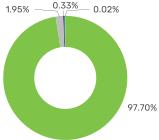
Energy from Fuels (%)

Energy from fuels chart
  • Coal (38,11,081 GJ)
  • Diesel (76,092 GJ)
  • Petrol and LPG (12,842 GJ)
  • Steam (from waste heat recovery) (737 GJ)

Wood saw - 0%
(No usage of Wood saw in the current year)

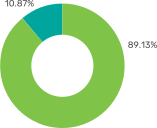
Energy from Electricity (%)

Energy from electricity chart
  • Electricity from Grid (9,62,526 GJ)
  • Renewable Energy (Electricity) (1,17,375 GJ)

Our ISO 50001-certified Energy Management System enables us to monitor consumption, identify high-energy areas and implement targeted efficiency initiatives.

Key Initiatives

  • Transitioned to energy-efficient LED lighting across facilities, reducing overall electricity consumption
  • Improved cooling tower efficiency through Variable Frequency Drives (VFDs), thermostats, centrifugal chillers and EC blowers
  • Established a connecting pipeline between Utility-1 and Utility-2, enabling a single chiller to support MB-5, MB-6A and MB-4 operations during lower load periods
  • Optimised process parameters and installed pressure control pumps, VFDs for cooling tower fans and timers for lighting systems
  • Installed on/off control valves for specific AHUs to improve energy optimisation
  • Increased renewable energy usage through captive solar power and power purchase agreements
  • Replaced screw chillers with energy-efficient centrifugal chillers
  • Installed IE3 pumps and initiated plans for progressive replacement with higher-efficiency IE4 and IE5 motors

Key Outcomes

  • Renewable energy generated: 30,31,547 kWh
  • Energy savings achieved: 38,19,211 kWh

Way Forward

Reducing energy intensity will remain a key operational priority for us. Our focus will be on improving process efficiency, strengthening utility performance, increasing renewable energy adoption and gradually upgrading older systems with more efficient alternatives. These actions will help us optimise energy use across operations while supporting our broader environmental goals.

Emissions Management

A comprehensive GHG inventory covering Scope 1, Scope 2 and select Scope 3 emissions guides our emissions management, helping us identify hotspots and implement targeted reduction strategies.

Scope 1 emissions primarily arise from fuel consumption and refrigerants, while Scope 2 emissions relate to purchased electricity. Scope 3 emissions, including supply chain and transportation, remain a key focus area, with efforts directed towards localisation and efficiency improvements.

Distribution of Scope 1, 2, and 3 Emissions (%)

51% 33% 16%
  • Scope 1 (3,77,764 tCO2e)
  • Scope 2 (1,89,832 tCO2e)
  • Scope 3 (5,89,356 tCO2e)

Scope 1 & 2 Emission Intensity (tCO2e/Rs. million)

FY 26 9.3
FY 25 9.5

Key Initiatives

  • Expanded coal storage shed capacity from 900 tonnes to 1,800 tonnes, reducing coal exposure to moisture during the monsoon season, improving combustion efficiency and lowering coal consumption by 945 tonnes during the rainy season
  • Routed steam condensate trap lines to boiler feed water tanks, reducing coal consumption required for steam generation
  • Continued renewable energy integration and operational efficiency initiatives across facilities

Key Outcomes

  • Emissions reduction achieved: 5,101 tCO2e

Way Forward

As we look towards FY 2026-27, our emissions reduction priorities will be anchored in a clear decarbonisation roadmap. We will continue to deepen renewable energy integration, strengthen our GHG management systems and improve operational efficiency across our manufacturing network.

Our focus will remain on maintaining rigorous oversight of Scope 1, Scope 2 and Scope 3 emissions, while aligning our operations with global climate goals. Through transparent monitoring, data-led interventions and targeted reduction initiatives, we aim to make steady progress towards a lower-carbon operating model.

Science Based Targets

SBTi Near-Term Targets Approved

Our GHG reduction targets are aligned with Science Based Targets initiative (SBTi) near-term criteria and have been validated by the SBTi, marking an important milestone in our climate roadmap. These targets align our decarbonisation efforts with the 1.5°C pathway and set clear reduction goals to be achieved by FY 2030-31.

  • Scope 1 and Scope 2: 42.0% absolute reduction in GHG emissions from the FY 2024-25 base year
  • Scope 3: 51.6% reduction in GHG emissions per Rs. value added

This validation strengthens our accountability to stakeholders and reinforces our focus on building a lower-carbon operating model.


Water Management

Our water management commitment is centred on efficiency, recovery and reuse across operations. Advanced treatment systems enable us to reuse water in boilers, cooling towers and horticulture, reducing dependence on freshwater sources.

Across facilities, we continue to implement targeted efficiency measures to improve water recovery and strengthen reuse practices.

Key Initiatives

  • Diverted rinse water from the new pre-treatment plant to main source tanks through ponds, resulting in water savings
  • Reused steam condensate from MEE systems and rejected process water across boilers, cooling towers and gardening applications
  • Treated Bio ETP outlet water through reverse osmosis systems at the Common Effluent Treatment Plant and reused it for cooling tower makeup and boiler feed applications
  • Reused softener backwash water for gardening, reducing freshwater consumption

Key Outcomes

  • Reduction in freshwater usage: 1,15,643 KL

Way Forward

As part of water stewardship efforts, we will continue to prioritise responsible water management, help recycling and improved process efficiency across operations. Through our CETP at Unit 8 and unit-level process optimisation initiatives, we aim to maximise effluent recovery and strengthen water reuse across manufacturing processes.

Our focus will remain on reducing freshwater dependency and advancing a more circular approach to water management, supporting long-term water security across the regions where we operate.

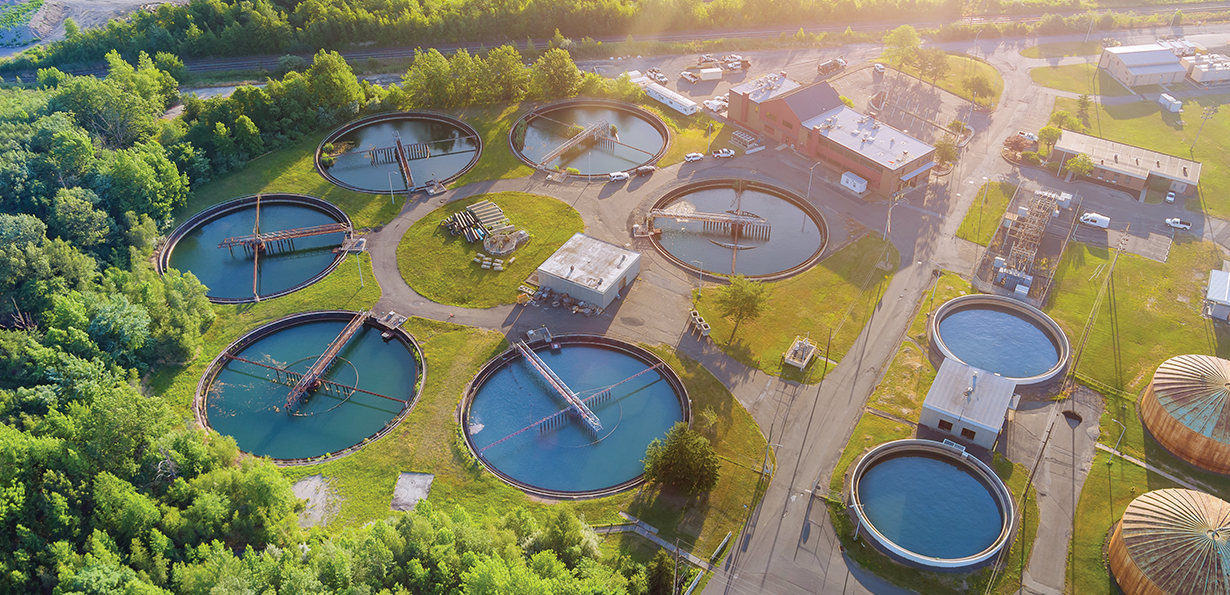
Water treatment operations

Waste Management

The principles of reduce, reuse and recycle guide our waste management policy. Structured handling processes help us ensure safe disposal, regulatory compliance and improved resource efficiency across hazardous and non-hazardous waste streams.

Key Initiatives

  • Redirected wastewater from LTDS operations to the Common Effluent Treatment Plant for reverse osmosis treatment and reuse across operational units
  • Recovered and reused effluents generated from DMSO layers and other process streams, reducing wastewater generation
  • Reduced hazardous waste generation by lowering ATFD salt moisture content and improving segregation practices to reduce ETP sludge generation
  • Continued wastewater recovery and reuse initiatives across operations

Key Outcomes

  • Wastewater recycled and reused: 89,036 KL

Way Forward

Our waste management approach will be shaped by a stronger circular economy mindset, where waste is increasingly treated as a recoverable resource. Our aspiration is to build a more regenerative operational model that reduces waste at source and moves us closer to zero-landfill future.

This will be supported by advanced solvent recovery, strategic partnerships, food waste composting and continued efforts to reduce hazardous waste through lower ATFD salt moisture content and improved ETP sludge segregation.

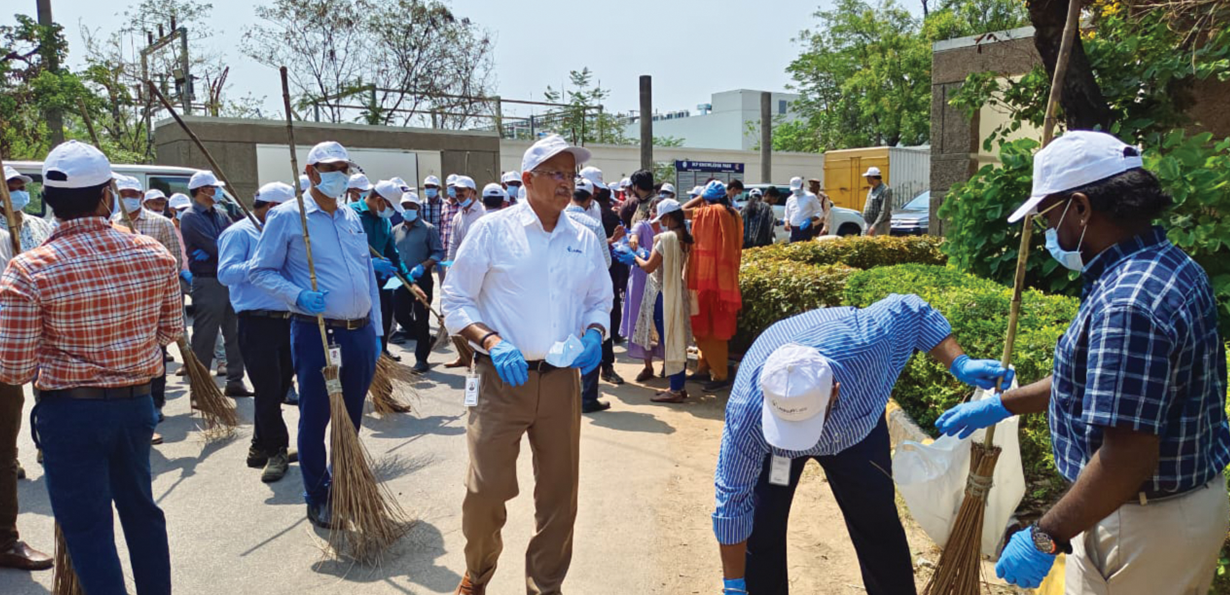
Waste management and community clean-up activity

Biodiversity Management

We recognise the importance of ecological balance in and around our operating locations. Through awareness programmes, plantation initiatives and community participation, we aim to support conservation and responsible environmental stewardship.

Key Initiatives

  • Conducted plantation drives and environmental awareness programmes across locations
  • Participated in community-led environmental activities in collaboration with local bodies and stakeholders
  • Continued initiatives to improve environmental awareness among employees and local communities

Way Forward

Moving forward, our biodiversity efforts will focus on ecological restoration, science-based planting and deeper community engagement. The aim is to move beyond greening alone and support resilient ecosystems around our operating locations.

Through planting initiatives, environmental education programmes and long-term monitoring, we will continue to strengthen stewardship among our workforce and local communities while creating lasting ecological value.

Green landscape around Laurus Labs operations